

Christopher Pitt Warns a Lending Practice Courts Condemned in 1878 Still Appears at Affordable Housing Closings
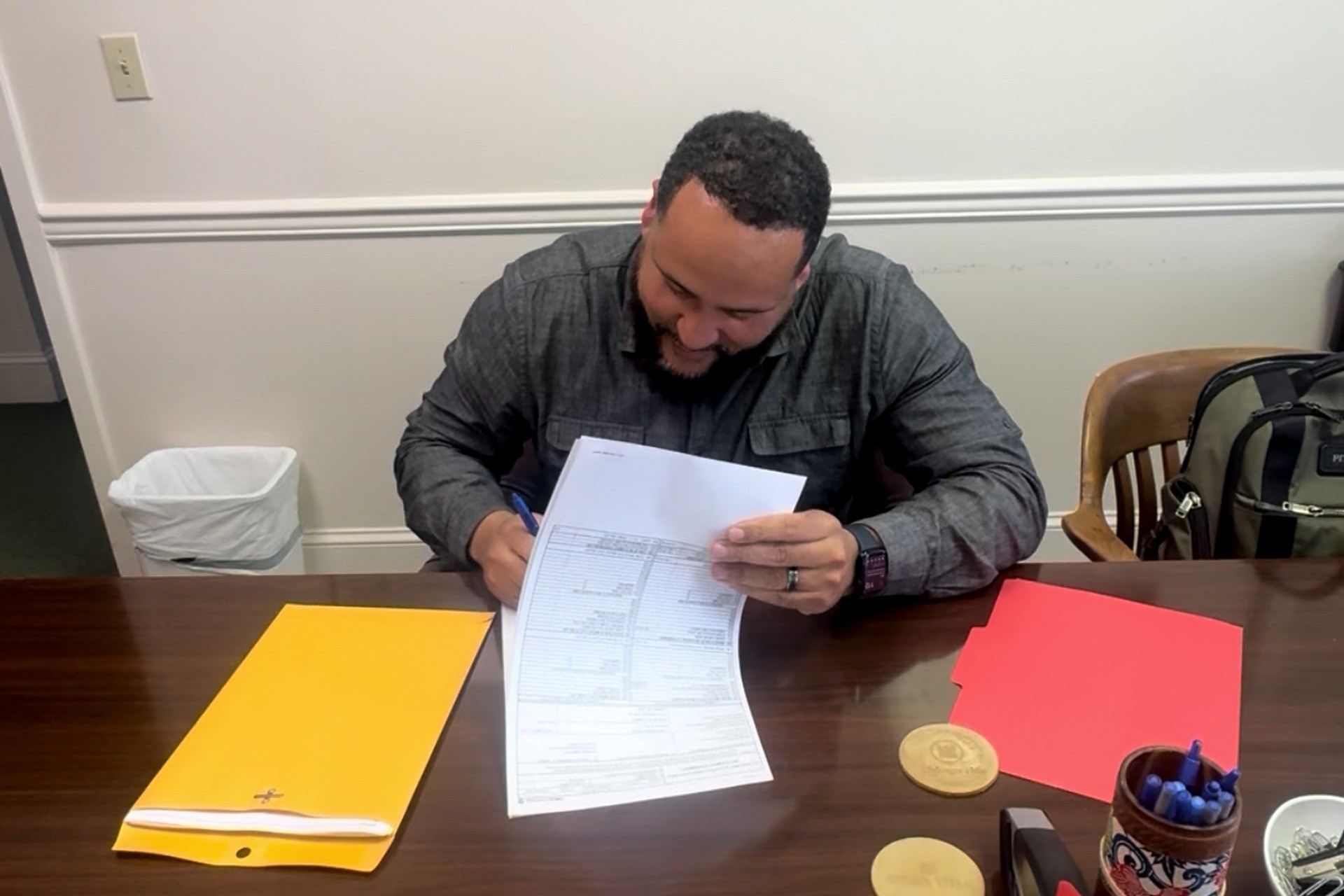
Christopher Pitt, a 20-year affordable housing practitioner, reviews closing documents. Pitt has launched a series examining contractual practices he says push community developers out of affordable housing.
Amid a 7.2 million-home shortage, a 20-year practitioner launches a series on the closing-table practice he says is pushing community developers out.
A deed in lieu of foreclosure is traditionally a post-default workout tool, negotiated between a lender and a borrower as an alternative to foreclosure proceedings. According to Pitt, when the instrument is instead required in advance as a condition of funding, the risk profile of an affordable housing project changes fundamentally and production suffers in ways that compound across the industry.
Pitt identifies four ways the practice suppresses housing production. First, the developer bears the risk of total property loss from the first day of the project, regardless of performance history. Second, the exposure discourages participation. Experienced developers decline the terms, and emerging developers, often those most connected to the neighborhoods being served, either accept disproportionate risk or exit the field. Third, the clouded ownership position can complicate a project's ability to attract additional lenders and investors. Fourth, each project that stalls under these terms removes finished or near-finished homes from communities that already face severe shortages.
"A traditional real estate developer answers to the market. A community developer answers to partners cities, agencies, land banks, and quasi-public lenders because affordable housing cannot be built without them," said Pitt. "When the price of that partnership is handing over the keys to the property before a single payment is due, that is not partnership. That is leverage and every community developer pushed out by those terms means homes that never get built."
The legal system has long viewed such arrangements with skepticism. The United States Supreme Court held in Peugh v. Davis, 96 U.S. 332 (1878), that a borrower's equity of redemption cannot be waived by agreement at the time a loan is made. Maryland's highest court reached a similar conclusion in C. Phillip Johnson Full Gospel Ministries, Inc. v. Investors Financial Services, LLC, 418 Md. 86 (2011), holding that a deed in lieu executed at closing functions as a mortgage and is unenforceable as a deed.
According to the National Low Income Housing Coalition, the United States faces a shortage of 7.2 million rental homes affordable and available to extremely low-income renters. Pitt contends that the national conversation focuses on funding and zoning while overlooking the contractual terms that determine whether mission-driven developers can survive long enough to build.
"The developers building affordable housing should not carry more risk than the developers building luxury condominiums," Pitt said. "Communities cannot produce affordable housing at scale when the people most committed to building it are asked to accept terms no market-rate developer would sign."
The series will publish across Pitt's platforms, examining one structural barrier at a time.
About Christopher Pitt
Christopher Pitt is a 20-year affordable housing and community development practitioner, founder of PittPass Development Group, and creator of the Pursuit to Own platform. Known as The Purpose Developer, Pitt is a TEDx speaker and Co-Chair of ULI Baltimore's Affordable Housing Council.
Christopher Pitt
Pursuit To Own Foundation
email us here
+1 910-514-8787
Visit us on social media:
LinkedIn
Instagram
YouTube
Legal Disclaimer:
EIN Presswire provides this news content "as is" without warranty of any kind. We do not accept any responsibility or liability for the accuracy, content, images, videos, licenses, completeness, legality, or reliability of the information contained in this article. If you have any complaints or copyright issues related to this article, kindly contact the author above.
